Essay
What Happens When Your Children Need You Less
6 min read
There is a silence that arrives in a house that was once loud. Not the silence of an empty room, but the silence of being needed less. The shoes by the door grow larger and then disappear altogether. The questions you used to answer all day long are now answered by someone else, or by no one, or by the child themselves.
For years, your usefulness was never in doubt. You were the first call, the last word, the person who knew where everything was. And then, slowly, without ceremony, that begins to change.
The role that quietly retires
No one hands you a notice. There is no final day. The shift happens in increments so small you barely register them — until one evening you realize the house has not needed you in a particular way for some time, and you are not sure when that stopped.
We rarely talk about this. We talk about the sleepless nights and the chaos of small children, but not about the strange weather that comes after, when the storm has passed and the air is suddenly, unnervingly still.
Being needed is one of the most powerful identities a person can hold. Letting go of it is one of the quietest losses there is.
There is pride in it, of course. You raised someone capable of leaving. That was always the point. But pride and grief can live in the same room, and often do.
Who were you before the role
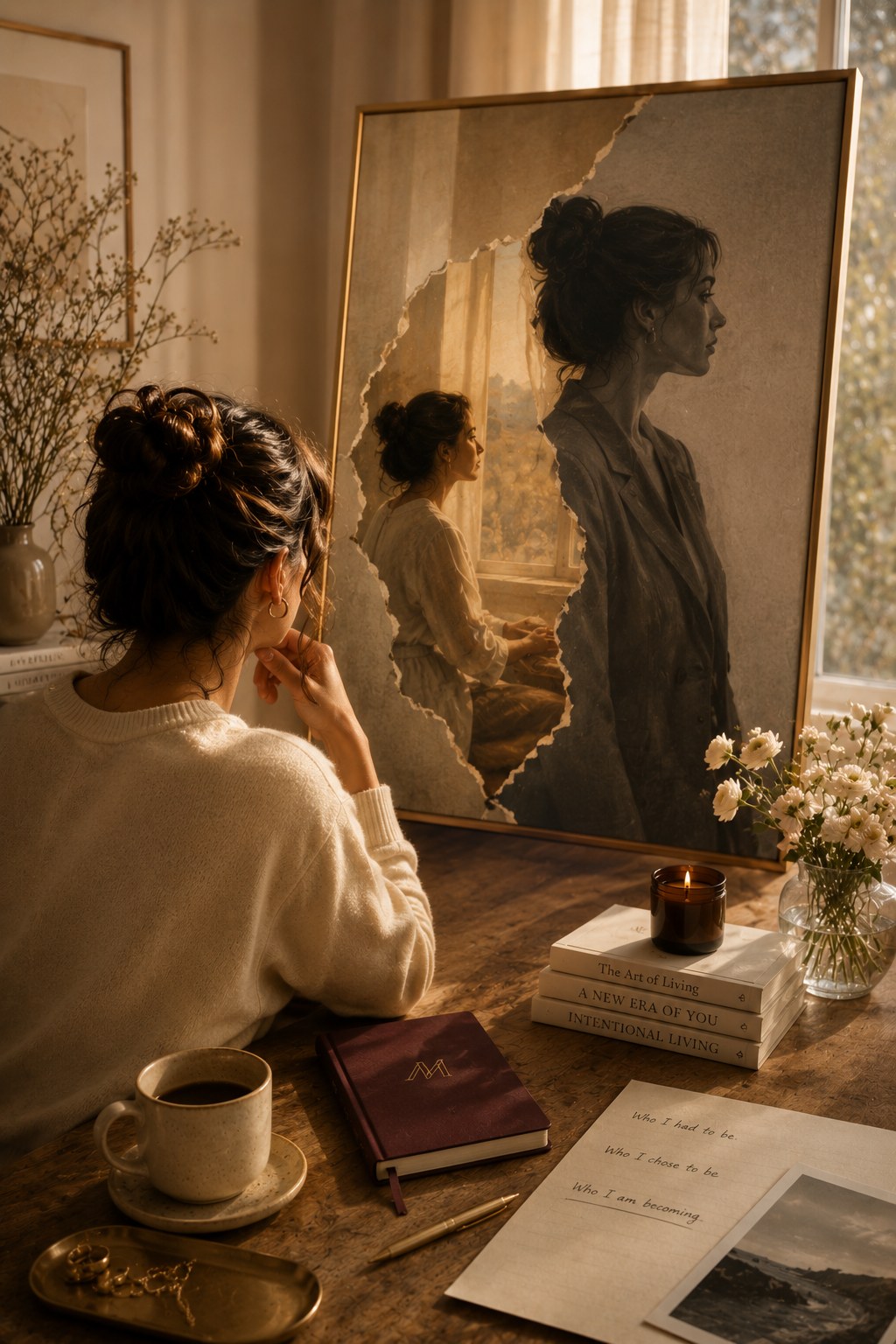
The harder question arrives later, usually alone, usually in an unremarkable moment. If you are no longer the person whose entire day is shaped by another's needs, then who, exactly, are you?
It is not that motherhood erased you. It is that it asked for so much, for so long, that the parts of you unrelated to it grew quiet from disuse. Interests went unfed. Curiosities were postponed. Ambitions were folded carefully and put away, with the honest intention of returning to them later.
Later has a way of arriving suddenly.
The invitation underneath the loss
What feels at first like emptiness is, on closer inspection, space. The same hours that once belonged to someone else are now, improbably, yours. This is disorienting precisely because it has been so long since anything was simply yours.
The temptation is to fill the space immediately — with worry, with busyness, with a fierce attachment to whatever still needs doing. But the more honest response is to sit inside the quiet long enough to hear what rises in it.
You are not at the end of something. You are at the part no one describes, the part where a woman who has spent years tending to everyone else is finally, almost reluctantly, returned to herself. The role is smaller now. You are not. The question is no longer who needs you, but what you might want to become with the time that is, at last, your own.